
Simplifying SHA-1 Key Generation for Flutter Firebase: A Step-by-Step Guide If you're a Flutter developer looking to harness the power of Firebase in your project, you've likely encountered the need to generate a SHA-1 key. This key is pivotal for several Firebase services, including authentication and cloud messaging. However, generating the SHA-1 key can be a stumbling block for many developers. In this comprehensive guide, we aim to simplify the process, breaking down each step to help you generate your SHA-1 key with ease. The SHA-1 Key Challenge The process of generating a SHA-1 key can be challenging for Flutter developers, and common issues include: Selecting the Correct Keystore : The key generation process involves a keystore file. Using the wrong keystore can result in an incorrect SHA-1 key. It's essential to ensure that you're using the keystore associated with your app. Navigating to the Correct Directory : The key generation process requires you to open yo...
Components of a Computer System
A computer system consists of hardware, software, firmware and liveware.
.png)
Hardware
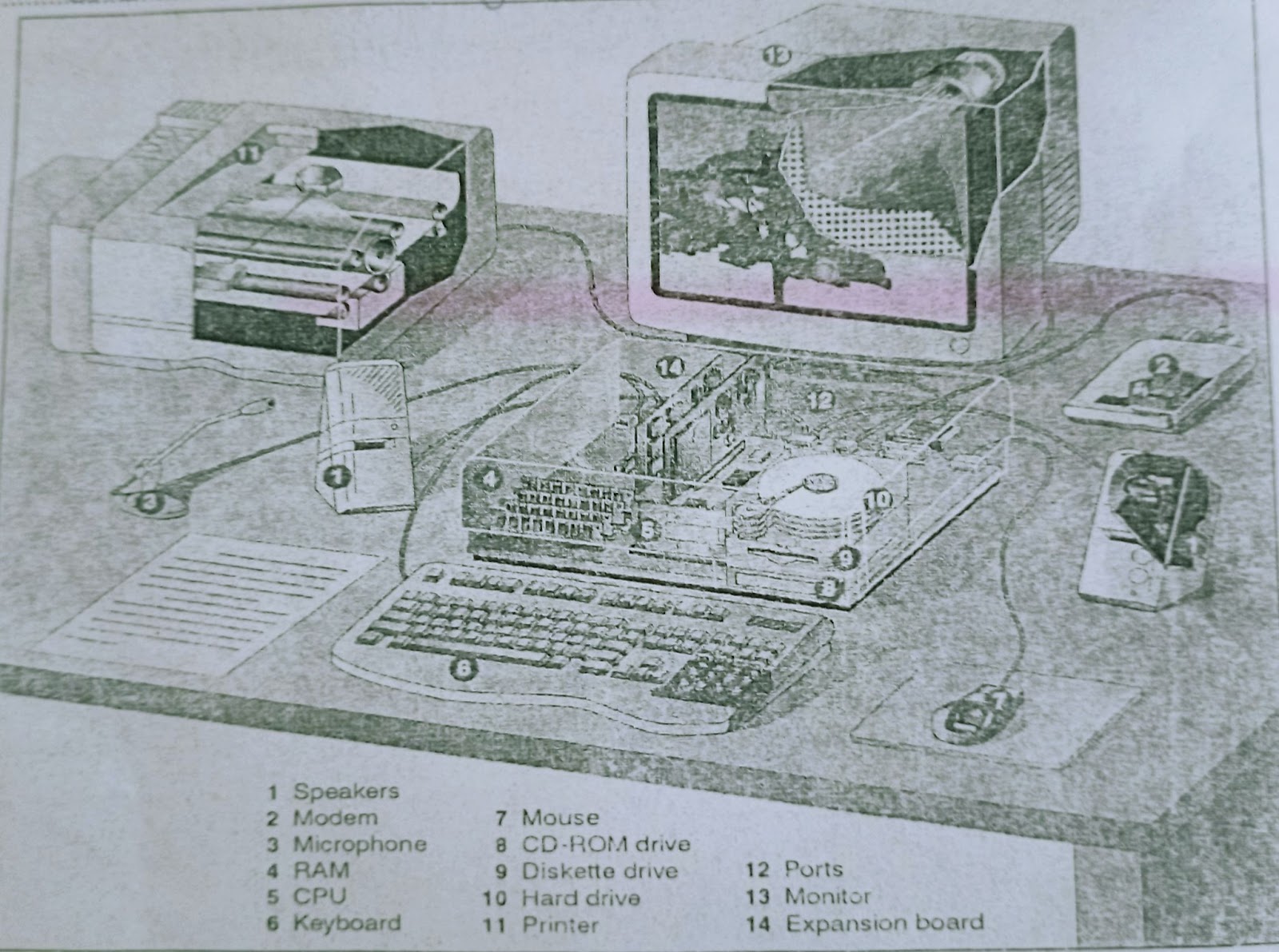
The hardware components of a computer are the physical components of the computer that you can touch. The monitor, system unit, keyboard, and mouse are the primary hardware components. Other peripherals include a webcam, router, external hard drive, printer, speaker and any other item that can be connected to the computer via cable or wirelessly.
The system unit also includes some critical internal hardware components such as;
Motherboard
Disk Drive
Random Access Memory (RAM) (RAM)
CPU
Graphics Card
CD ROM
Fan,etc.
Software
Software is a collection of programs or applications that contain the instructions that allow a computer to function. For example, when you type words on the keyboard, the software is in charge of displaying the correct letter in the correct location on the screen. Software is stored on your computer's hard drive. CD-ROM, DVD, or floppy disk and is loaded (copied) from the disk into the computer RAM (Random Access Memory) when needed.
.png)
Firmware
A computer's main memory is divided into two sections. Random Access Memory (RAM) and Read Only Memory (ROM) (ROM). RAM is used to load software when it is needed, whereas ROM contains programs written by the computer manufacturer that can only be read but not written. These programs are known as firmware, and they are used to start up the machine (also known as booting) by performing necessary checks and then loading the operating system into RAM. Once the Operating System has been loaded, control of the system is transferred to it.
Firmware contains basic machine instructions that enable hardware to function and communicate with other software on a device. Firmware controls the hardware of a device at a low level.
- BIOS/ROM Chip
Liveware
A computer must be turned on or started by pressing a button, pressing a key, or clicking a button. All of the above actions are performed by the computer user, which makes the computer user an important component of the computer system.
The human expertise required in the field of information technology. Software and hardware engineers, IT managers, project managers, database engineers, network administrators, students, teachers, and any other type of user are among those who fall into this category.
Comments
Post a Comment